
AUDIENCE STRATEGY WORKS BEST WHEN DATA, CREATIVE, AND HUMAN CONNECTION MOVE TOGETHER
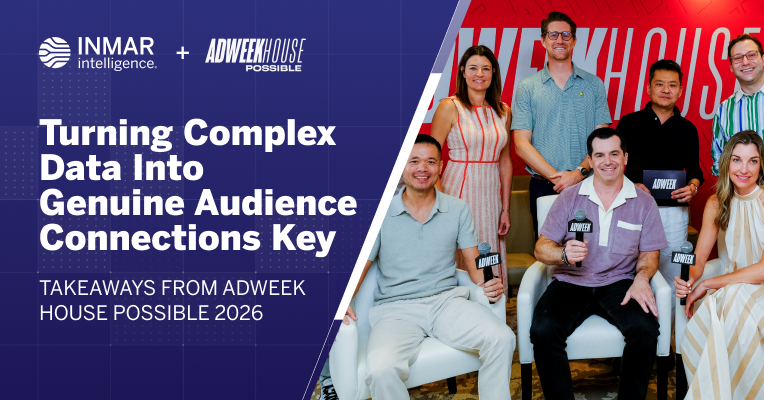
At Adweek House during POSSIBLE 2026, Inmar’s sponsorship of the group chat “Wait… Who Are You Even Talking To?” brought the conversation around audience strategy into sharper focus. Data still plays a central role, but speakers kept coming back to a bigger idea: strong audience strategy connects signals to real human behavior—and then brings that to life through creative and experience.
Inmar’s Head of Agency Partnerships & Data Solutions, Adam Goldsmith joined co-speakers from all different industries to discuss how brands are blending signals, storytelling, and real-world connection to engage audiences in more meaningful ways.







Below are key takeaways from the discussion. Watch the full session on Adweek.com.
Data builds the foundation—but it doesn’t find the audience on its own
The panel moved quickly past the idea of data as a standalone advantage. Most brands already have access to it. The difference comes from how they apply it.
Teams are moving toward:
- Connecting fragmented datasets
- Focusing on real behavior instead of static profiles
- Using signals to guide decisions, not just inform them
Creative plays a bigger role here than expected. Instead of simply delivering messaging, it helps identify and refine the audience through engagement. That shift changes how campaigns take advantage of real-time learning.
Growth comes from participation
Audience strategy is expanding beyond who you reach to how people engage.
The panel emphasized that strong brands create environments where consumers take part—through communities, shared experiences, and direct interaction.
Kelsey Agostinelli, Vice President, Marketing Operations at MARS tied that directly to business impact:"We’re here to drive penetration, growth, and volume… how do you measure that connection back to commerce?"
Greg Mullander, Senior Director of Brand Experience for AARP added that this starts with understanding real needs, then building products, content, and services around those needs over time.
Digital engagement works better when it leads somewhere real
Even highly digital audiences want physical, real-world interaction. The panel pointed to a growing expectation that brands create experiences people can step into—spaces that deepen emotional connection, give people something to return to, and create moments worth sharing.
Greg Holtzman, Senior Director, Partnerships and Communications at Related Companies showed how that plays out in practice. For one of NYC’s tallest tourist attractions, The Edge, the team used customer feedback and reviews to identify a gap in the indoor experience—especially when weather disrupted the main attraction. That insight is now driving major investment into a more immersive, all-weather environment designed to meet rising expectations.
"After listening to consumer feedback… we realized we need an equally stellar indoor experience. People want more than just the pretty picture—they want an immersive environment."
Programming also plays a role, with curated events like concerts and activations designed to attract different audiences and create new reasons to engage.
Feedback sharpens the experience over time
Once brands create ways for audiences to engage—through content, community, or physical experiences—the next step is using that engagement to improve what comes next.
The panel focused on how feedback shows up across touchpoints: reviews, social conversations, direct outreach, and service interactions. These signals reveal where expectations fall short and where there’s room to evolve.
Greg Holtzman’s example at Edge reflects how this plays out at scale, where customer feedback created a clear direction for investment and improvement.
Mark Bietz, CMO of HalloweenCostumes.com brought this into a more operational context, sharing how a service delivery issue created direct, detailed feedback from customers about what mattered most and how the experience could improve.
"Those customers… spent time telling us what went wrong, how it affected them, and how we can get better. Those are the ones who can become lifetime customers."
These inputs carry weight because they come from active engagement. They reflect real expectations and create a clear path for refinement.
Measurement is shifting toward relationship quality
As audience strategy expands across data, participation, and experience, measurement is evolving alongside it. The focus is moving closer to outcomes—understanding how engagement translates into action, and how those actions build over time.
Tying it back to the conversation’s starting point, Adam Goldsmith framed this around execution: success starts with clearly defining what outcomes matter, then consistently delivering against them using connected data and activation.
"It’s about knowing what success looks like and being consistent… bringing multiple signals together and actually being able to activate on those insights."
That shift shows up in the signals brands prioritize: repeat engagement, ongoing participation, willingness to recommend, and real purchase behavior. Together, these indicators reflect long-term value more clearly than campaign performance alone.
And at the same time, new discovery channels—especially the growing influence of AI in decision-making moments—are reshaping how those outcomes take form. Garrett Dale, CMO of Kepler noted that a significant share of consumers are already acting on AI-driven recommendations, with many willing to purchase directly from the brands surfaced in those responses.
As these behaviors evolve, it becomes more important for brands to understand how they show up across these emerging touchpoints—and how that presence drives action.
See how we’re embracing AI in our workflows.
WHERE THE CONVERSATION GOES NEXT
At its core, audience strategy is inherently more dynamic, more participatory, and more connected to real behavior than ever before. Brands that succeed will understand how to move from insight to action—using data to identify opportunities, creative to engage meaningfully, and experience to build lasting connections. The next step is scaling this approach across channels and partners without losing that sense of relevance.
Fill out the form to start a conversation about audience strategy for your business.