
REALIZING FOOD RETAIL’S POTENTIAL AS A HEALTH DESTINATION
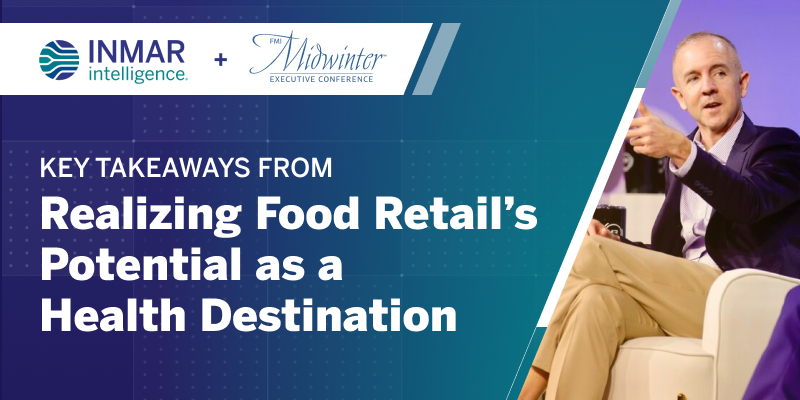
At the 2026 FMI Midwinter Executive Conference, Inmar was proud to join industry leaders from FMI, Sprouts and Hy-Vee for a mainstage Keynote conversation exploring how food retail is evolving into a critical access point for health and well-being.




Three key themes stood out as especially important for retailers, brands, and partners shaping the future of retail health and what it takes to embed health into retail operations in ways that are measurable, trusted, and meaningful for shoppers.
HEALTH INITIATIVES ARE MOST EFFECTIVE WHEN INTEGRATED INTO RETAIL STRATEGY
Panelists discussed how integrating health-focused initiatives into everyday retail operations strengthens their role in serving shoppers while also supporting long-term business performance goals. Grocery stores already sit at the intersection of food, pharmacy, nutrition, and community access. When these functions work together—supported by pharmacists, registered dietitians, merchandising teams, and store associates—health becomes part of how the business operates.
As Aaron Wiese, President of Hy-Vee noted, “Retail health is a great avenue of a retail store where people are coming every single week and looking for solutions for healthier lifestyle.” This frequency positions retailers to influence health decisions consistently, ultimately delivering on the expectations of the consumer seeking a healthier, happier lifestyle.
From Inmar’s perspective, integration is essential. With visibility into health and shopping behavior across a broad portion of the U.S. population—representing activity from tens of millions of patients every month—Inmar brings a data-informed view of how food, pharmacy, and incentives intersect over time. This longitudinal perspective helps retailers and brands design health-focused programs that reflect real behavior patterns, rather than isolated interactions.
PERSONALIZATION DRIVES ENGAGEMENT AND OUTCOMES
A consistent message throughout the discussion was that shoppers respond best when health support feels relevant and actionable. Panelists emphasized the importance of tailoring health support to individual needs, sharing examples of how personalization—through data, in-store expertise, and digital tools such as nutrient scoring systems, targeted incentives, and condition-specific guidance—helps shoppers make informed decisions and translate intent into action without feeling overwhelmed.
Citing the launch of in-store food nutrient scoring systems, Aaron Weise explained the impact of combining information with choice: “In just the first few weeks, tens of thousands of consumers have switched to the healthier option by having that information available to them.” This insight reinforced how clarity at the point of decision can influence everyday behavior.
Data plays an important role, but panelists stressed that personalization works best when paired with human connection. In-store clinicians and advisors help shoppers translate information into practical choices, whether that’s learning how to read a label or finding alternatives that better align with individual health goals.
Reinforcing the connection between personalization and performance, CEO of Inmar Intelligence, Spencer Baird added, “Convenience, value, and personalization continue to be the center point of what drives returns.” Inmar’s ability to connect health signals with shopping behavior at scale enables retailers and brands to support these moments with precision, reinforcing positive habits through timely incentives and messaging.
INCENTIVES SHAPE BEHAVIOR—WHEN DESIGNED WITH CARE
The session reinforced that incentives influence behavior most effectively when they encourage progress. Panelists discussed the value of rewarding healthier choices, particularly in categories that have the greatest impact on long-term health outcomes and shopper trust. Emphasizing that affordability must be built into the model itself, Jack Sinclair, CEO of Sprouts Farmers Market, commented “It can’t be that to eat healthy you have to spend a lot more money.” He went on to describe how assortment decisions, nutrition guidance, and category strategies work together to support health without putting it out of reach for shoppers.
By aligning incentives with shopper needs and reducing friction at the shelf, retailers can reinforce repeat behaviors that support both health goals and business outcomes. Panelists noted that when incentives are paired with clear information and thoughtful merchandising, they help shoppers see nutritious options as practical, everyday investments.
Building on this point, Spencer Baird pointed to the need for incentive strategies that reflect the different ways shoppers approach health, from prevention to condition management. “People engage with health in very different ways,” he noted, stressing the importance of “incentivizing positive choices rather than penalizing bad ones.” His perspective reinforced that well-designed incentive programs provide clarity and flexibility at the point of decision while still delivering measurable value for retailers and brands.
WHAT NEEDS TO BE TRUE IN ORDER TO MOVE FORWARD
Overall, this conversation made one point clear: food retailers already have the reach, trust, and frequency to influence health at scale. What needs to be true moving forward is alignment—across retail, healthcare, CPGs, and technology partners—around a shared focus on making healthier choices easier to understand and easier to act on.
As the industry continues to explore food as a pathway to better health, Inmar remains committed to helping retailers and brands turn insight into action, supporting programs that improve shopper engagement while delivering measurable impact for communities.
Fill out the form to get started for your business.